
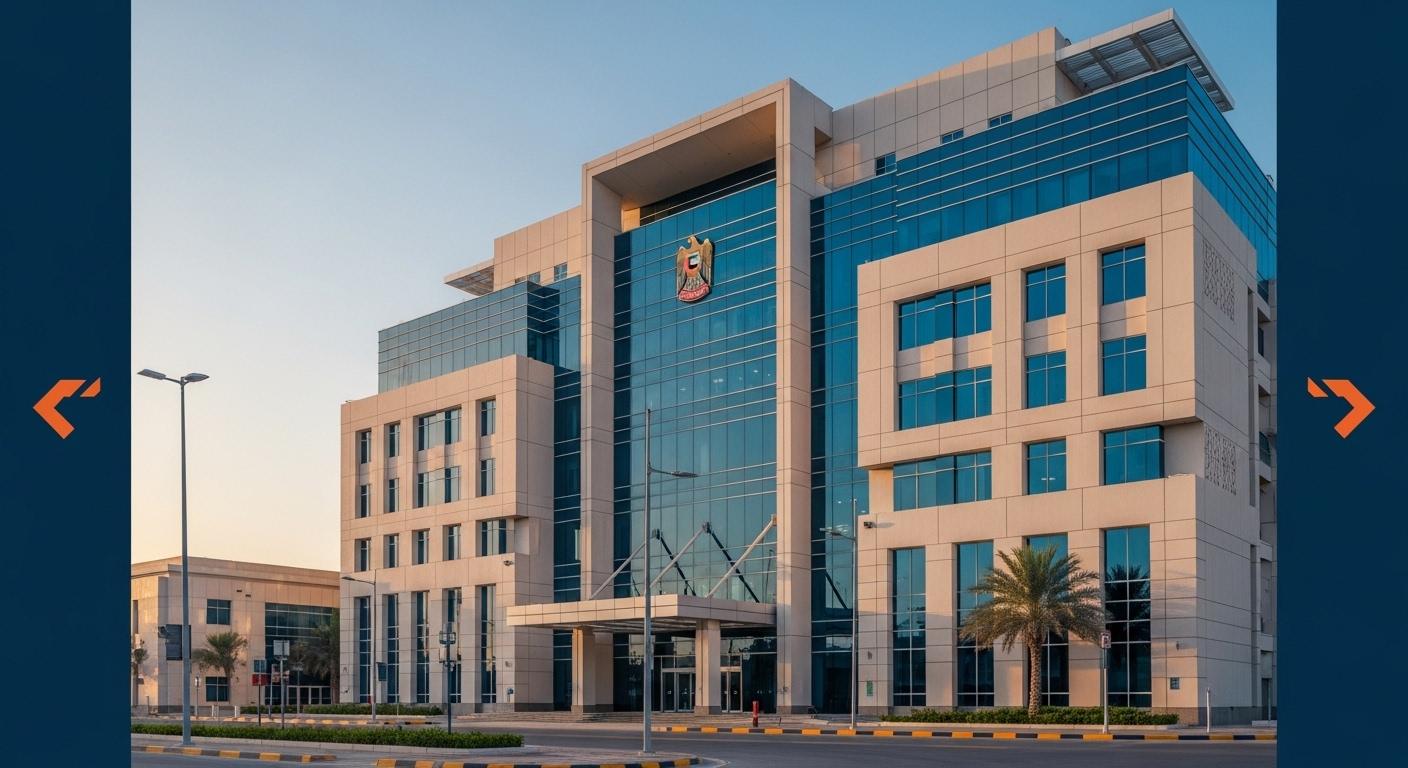
The Emirates Conformity Assessment Scheme (ECAS) is the UAE's mandatory product approval system. Without a valid ECAS certificate for regulated products, goods will not clear UAE customs. As of 2026, ECAS covers 48 product categories. This is the complete guide for European exporters and UAE importers.
What ECAS is and who manages it
ECAS is managed by ESMA (Emirates Standards and Metrology Authority), the UAE federal standards body. It was established under Cabinet Decision No. 21/2005 and substantially expanded in scope through 2020–2024.
ECAS ensures that regulated products entering the UAE market meet the relevant UAE technical regulations or internationally harmonized standards. The system is digital — all applications go through the ESMA E-services portal.
Key facts:
- Over 48,000 ECAS certificates issued annually
- Average first-time rejection rate: 31% (documentation deficiencies)
- Certificate validity: 1–3 years depending on product category
- CE marking alignment: 23 product categories directly reference EU CE requirements
Which products require ECAS?
ECAS covers a wide range of product categories. Major groups:
Electrical and electronics:
- Low-voltage electrical equipment
- Household electrical appliances (washing machines, refrigerators, microwaves, kettles)
- Audio/visual equipment
- Mobile phones and tablets
- LED lights and lighting equipment
- Power tools
Machinery and equipment:
- Pressure vessels and boilers
- Gas appliances and fittings
- Elevators and escalators
- Welding equipment
- Fire suppression systems
Consumer products:
- Toys and children's equipment
- Personal protective equipment (helmets, safety glasses)
- Bicycles and sports equipment
Construction materials:
- Steel rebars and structural steel
- Cement and concrete products
- Insulation materials
- Safety glass
Products NOT requiring ECAS:
- Pure food and beverages (regulated by food authority separately)
- Pharmaceuticals (regulated by MoHAP)
- Medical devices (regulated by MoHAP)
- Cosmetics (regulated by MoHAP)
ECAS application process step by step
Step 1: Determine applicable standard
Log in to esma.gov.ae and use the product classification tool. Find your product's HS code and determine:
- The applicable UAE technical regulation or standard
- The conformity assessment route (self-declaration, type examination, or full QA system)
Most imported products from Europe use the "type examination" route: laboratory testing of a product sample against the standard.
Step 2: Select an ESMA-accredited conformity assessment body (CAB)
ESMA maintains a list of accredited CABs. For European products, commonly used CABs:
- TÜV Rheinland Emirates (Abu Dhabi, Dubai)
- Bureau Veritas UAE
- SGS Gulf
- Intertek Testing Services UAE
- NATA (National Agency for Testing and Accreditation) — Australia-accredited labs accepted for some categories
Step 3: Submit technical dossier to the CAB
Required documents (vary by category, but typically):
- Technical file — product description, design drawings, bill of materials
- Test reports — from an IEC 17025-accredited laboratory (can be a European lab)
- Quality management certificates — ISO 9001, ISO 14001 if applicable
- EU CE Declaration of Conformity — for products with EU CE certification; accelerates ECAS review
- Product samples — for categories requiring local laboratory testing
- Labeling samples — showing compliance with UAE labeling requirements
Shortcut for CE-marked products: For product categories where UAE technical regulation directly references EU standards (e.g., low-voltage electrical equipment, toys), an existing EU CE DoC with relevant test reports significantly reduces ECAS review time. Some categories qualify for ECAS certificate based on CE documentation alone — no additional UAE lab testing required.
Step 4: CAB review and ESMA portal submission
The CAB reviews your dossier, may request clarifications, and submits the application to ESMA on your behalf through the ESMA E-services portal.
Timeline:
- Complete and compliant documentation: 15–25 working days
- Requiring product sample testing in UAE: 25–45 working days
- Complex machinery with site inspection: 45–90 working days
Step 5: ECAS certificate issuance
ESMA issues the ECAS certificate digitally through the portal. The certificate includes:
- Certificate number (for customs verification)
- Product description and model numbers
- Applicable standard
- Certificate validity period
- ESMA approval mark details
Mandatory ESMA marking: Certified products must display the ESMA mark on the product and primary packaging. Mark specifications available from esma.gov.ae.
ECAS certificate and UAE customs clearance
Dubai Customs, Abu Dhabi Customs, and Sharjah Customs all validate ECAS certificates electronically at the time of customs declaration. The ECAS certificate number is entered in the customs declaration (bill of entry).
What happens without ECAS:
- Container placed on hold at Jebel Ali or Khalifa Port
- Storage charges: 200–350 AED per day per 20-foot container
- Customs can issue a ban on product release and require re-export
- Repeat violations can lead to importer registration being flagged
For products that were shipped before ECAS was obtained: In urgent cases, Dubai Customs allows a temporary release under a bank guarantee (typically 120–150% of duty value) while ECAS certification is completed. This is expensive and stressful — avoid it.
Annual renewal and changes to certified products
ECAS certificates expire after their validity period (1–3 years). Renewal requires:
- Submission of renewal application 3 months before expiry
- Update of test reports if standard has been revised
- Updated quality management certification
If you change the product: Any material change to a certified product (new model variant, different voltage rating, new material) requires either:
- Amendment to existing certificate (minor changes)
- New ECAS application (substantive changes)
Failure to renew or report changes voids the existing certificate. Customs clearance will fail for subsequent shipments.
ECAS costs and budget planning
Complete ECAS certification budget for a typical European consumer electrical product:
- CAB registration and admin: AED 2,000–4,000
- EU lab test report (if not already available): €2,000–8,000
- UAE additional lab testing (if required): AED 5,000–15,000
- ESMA fees: AED 1,500–5,000
- ESMA mark registration: AED 500–1,500
- Total budget: AED 15,000–40,000 (EUR 3,700–10,000) per product model
For companies with multiple product models, costs scale with the number of models. Some European manufacturers certify a "parent model" and add variants as minor amendments — significantly reducing per-model costs.
Expedited ECAS for time-sensitive launches
ESMA offers a fast-track process for certain categories:
- Fast-track eligibility: Products already certified under recognized international schemes (EU CE, UKCA, JAS for Japanese standards)
- Timeline: 10–15 working days versus standard 20–30
- Premium: Approximately 30–50% higher CAB fees for expedited review
For new product launches where UAE market entry timing is commercially critical, the fast-track cost premium is typically justified.
Request ECAS compliance support — we coordinate the full ECAS process for European exporters entering the UAE market.