
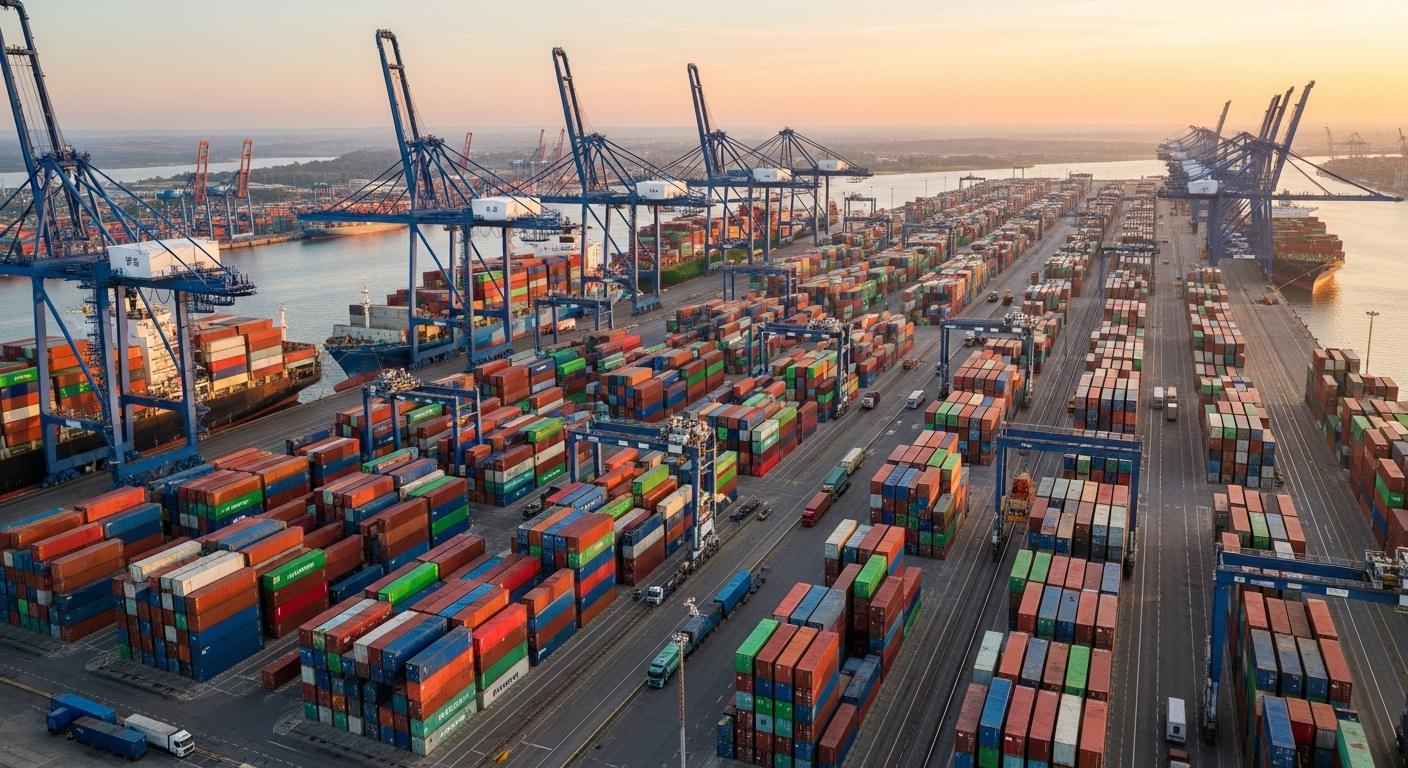
Container consolidation from EU ports to MENA destinations runs 14–22 days of sea transit, costs 1,400–3,800 USD per 40ft container in 2026, and can cut per-unit freight by 30–55% for importers ordering under one full container. Here is the full picture — ports, lead times, and what actually determines cost.
What consolidation actually means
Consolidation — also called LCL (Less than Container Load) groupage — combines shipments from multiple buyers into a single 40ft or 20ft container. Instead of paying for empty space, you pay for the cubic meters you actually use. For MENA importers buying 3–15 pallets at a time, it is the difference between a viable margin and a blown budget.
The three biggest EU-MENA consolidation routes
1. Hamburg / Bremerhaven → Jeddah Islamic Port
- Transit time: 14–18 days
- Frequency: 2–3 sailings per week
- Cost range (2026): 1,400–2,200 USD per 40ft (FCL), 85–140 USD per CBM (LCL)
- Best for: German industrial machinery, automotive parts, chemicals
2. Rotterdam / Antwerp → Alexandria (Egypt)
- Transit time: 9–12 days
- Frequency: daily sailings
- Cost range: 1,100–1,800 USD per 40ft, 75–120 USD per CBM
- Best for: Dutch food products, Belgian pharmaceuticals, mixed consumer goods
- Port quirk: Alexandria often runs ahead of Port Said for smaller containers
3. Rotterdam / Antwerp / Genoa → Jebel Ali (UAE)
- Transit time: 16–22 days
- Frequency: 4–5 sailings per week
- Cost range: 1,800–3,800 USD per 40ft, 110–180 USD per CBM
- Best for: Electronics, luxury retail, construction materials
- Port quirk: Jebel Ali is the most efficient MENA port — clearance under 5 days with clean papers
Cost breakdown: what you are actually paying for
A typical 40ft FCL Hamburg → Jeddah shipment in 2026:
- Ocean freight: 1,400–2,200 USD
- Bunker Adjustment Factor (BAF): 180–340 USD
- Terminal handling (origin): 220 USD
- Terminal handling (destination): 180 USD
- B/L fee: 60 USD
- ISPS security: 25 USD
- Customs clearance (Saudi): 350–550 USD
Total: roughly 2,400–3,600 USD door-to-terminal for a full 40ft.
For LCL (consolidation), add a 50–80 USD per CBM handling premium compared to raw ocean cost — but you only pay for the space you use.
When to use FCL vs LCL
- FCL (full container): 12+ pallets, single product, predictable demand → cheaper per unit
- LCL (consolidation): 3–11 pallets, mixed products, testing new SKUs → cheaper total outlay
The crossover point is around 13–14 CBM. Below that, consolidation wins.
Insurance — non-negotiable
Marine cargo insurance costs 0.12–0.35% of CIF value. For a 30,000 USD shipment that is 36–105 USD. Every year, importers skip this to save 50 USD and regret it when a container falls off a vessel, catches fire, or is damaged in handling. Always insure.
Documentation checklist per shipment
- Commercial invoice (original + 3 copies)
- Packing list with CBM, weight, HS codes
- Certificate of Origin (chambers of commerce)
- Bill of Lading (telex release or original)
- Conformity certificate (SABER for Saudi, ECAS for UAE, GOEIC for Egypt)
- Insurance certificate
Missing any single document adds 2–5 days at destination.
How Go MENA runs consolidation
We consolidate client orders from multiple European suppliers into single containers bound for Jeddah, Alexandria, and Jebel Ali. Monthly scheduled sailings, one invoice for the whole container, and door-to-door tracking. Savings for clients ordering 5–10 CBM averaged 38% in 2025 compared to individual shipping arrangements.
Request a supplier or just tell us your CBM and destination — we will give you a total landed cost in under 4 hours.