
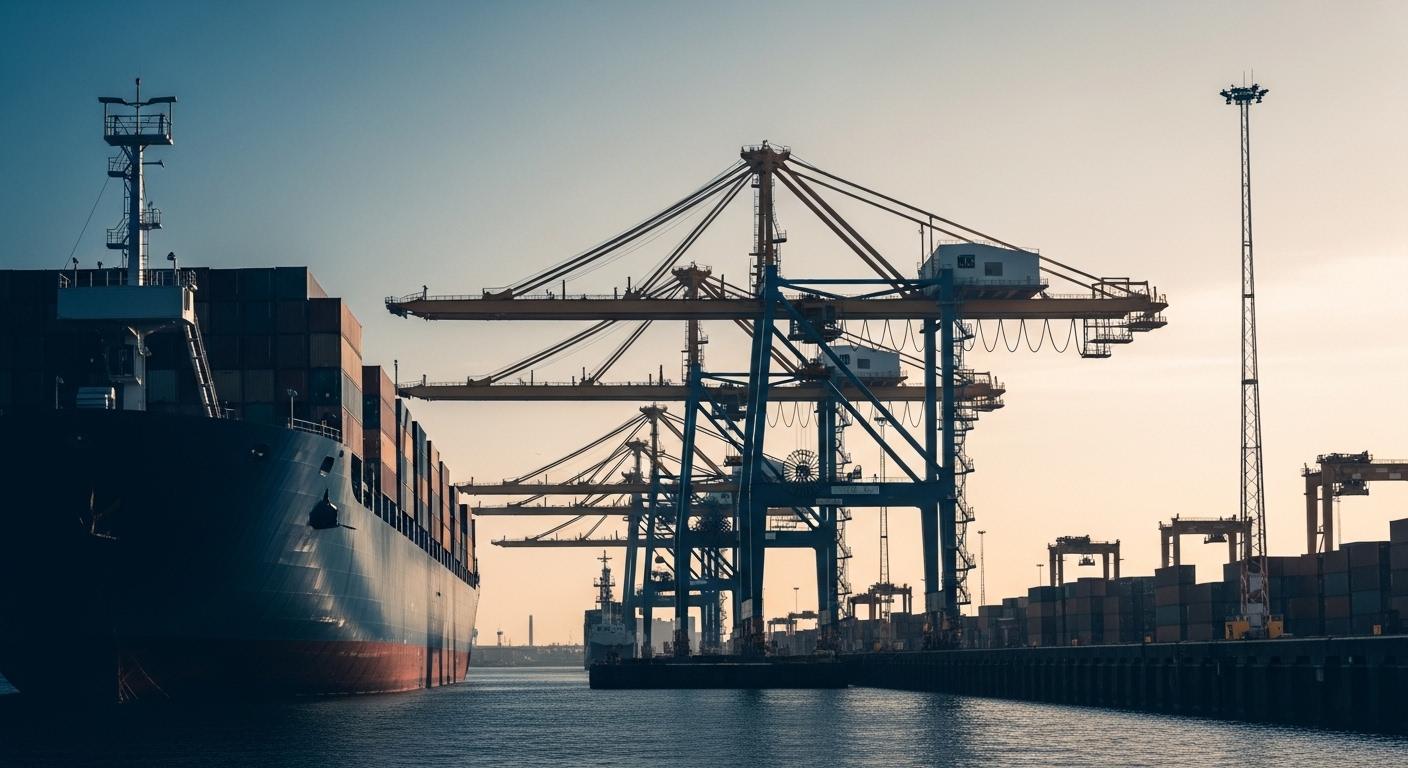
Marine cargo insurance costs 0.12% to 0.35% of the CIF value of a shipment from Europe to MENA — typically 60 to 180 EUR on a 50,000 EUR deal. Skipping it to save those euros is the most expensive mistake we see new importers make. One container lost at sea is enough to wipe out the entire year's trading profit. Here is what every MENA B2B importer should understand about marine cover.
Why marine insurance is non-negotiable in 2026
Ocean freight is safer than it has ever been, but the absolute numbers are still significant:
- Around 1,500 containers are lost at sea each year globally (World Shipping Council, 2024)
- Fire incidents on container vessels occur every 60 days on average
- Port handling damage accounts for 15-22% of all cargo claims
- Theft at Mediterranean port transits is a real, ongoing problem
For a MENA importer, any of these events without insurance means a 100% loss on that shipment. The alternative — a 100–400 EUR premium — is the cheapest risk transfer you will ever buy.
The three Institute Cargo Clauses you need to understand
Marine insurance is standardized worldwide by the Institute of London Underwriters clauses:
ICC (C) — the minimum
Covers named perils only: fire, vessel sinking, collision, jettison, general average sacrifice. Does NOT cover theft, water damage, non-delivery, or handling damage.
When used: Low-value bulk commodities. Almost never appropriate for B2B manufactured goods going to MENA.
ICC (B) — the middle tier
Adds earthquake, volcanic eruption, lightning, washing overboard, and seawater entry. Still excludes theft and shortage.
When used: Low-risk cargo that might face weather events but not port handling issues.
ICC (A) — all risks (what you should buy)
Covers all risks of loss or damage to the insured goods except those specifically excluded (war, nuclear events, intentional misconduct). This includes theft, pilferage, handling damage, water damage, and total loss.
When used: Any B2B shipment of manufactured goods, machinery, electronics, or premium retail. This should be your default.
How to specify marine insurance correctly on your PO
Most new importers write "insurance included" on the PO and leave it at that. That is not enough. Use this exact formulation:
> "CIF [destination port], Incoterms 2020. Insurance: Institute Cargo Clauses (A), 1/1/2009, covering 110% of invoice value, all risks, warehouse-to-warehouse, with claims payable at [destination port]."
The four critical elements:
- ICC(A) — all risks, not ICC(B) or ICC(C)
- 110% of invoice value — the extra 10% covers expected profit margin if the goods never arrive
- Warehouse-to-warehouse — coverage extends from the supplier's warehouse to your receiving warehouse, not just port-to-port
- Claims payable at [destination port] — so you can file locally, not in Europe
- War risks — war, civil war, revolution, seizure, arrest by government authority. Buy War Risk extension separately (adds 0.03-0.08% depending on route)
- Strikes, riots, civil commotions — buy SR&CC extension (usually bundled with War Risk)
- Inherent vice — rust on steel, ripening of fruit, natural expansion. The supplier's quality, not the insurer's problem
- Delay — lost profits from late arrival. Only covered under specific contingency policies
- Packaging insufficiency — if goods were not properly packed for ocean transit, claims can be denied
- At port discovery — Before accepting the container, inspect exterior for damage. If you see it, note "DAMAGED" on the delivery receipt. Never sign "clean" without inspecting.
- Notify the insurer within 48 hours — Most policies require notification within 2 working days of discovering damage.
- Request survey — For damage claims above 5,000 EUR, always request an independent surveyor appointed by Lloyd's or similar. 200-500 EUR cost, paid by insurer if claim approved.
- Preserve the damaged goods — Do not repair, destroy, or dispose of anything until the surveyor has inspected.
- Submit claim — Commercial invoice, B/L, packing list, survey report, delivery receipt with damage noted, photos.
Typical premiums in 2026
| Shipment type | Route | Value (EUR) | Premium (EUR) | Rate |
|--------------|-------|-------------|---------------|------|
| Industrial machinery | Hamburg → Jeddah | 50,000 | 120-180 | 0.24-0.36% |
| Food products | Rotterdam → Alexandria | 30,000 | 45-90 | 0.15-0.30% |
| Electronics | Antwerp → Jebel Ali | 80,000 | 240-480 | 0.30-0.60% |
| Pharma equipment | Hamburg → Dammam | 120,000 | 360-720 | 0.30-0.60% |
| Textiles | Genoa → Casablanca | 25,000 | 30-63 | 0.12-0.25% |
Electronics and pharma carry higher rates because theft rates on those categories are higher.
Common exclusions you need to know about
Even ICC(A) does not cover:
For shipments going to or through politically sensitive regions (Libya, Iraq, Yemen route), always buy the War + SR&CC extension. It costs less than 0.1% extra.
The claims process step by step
If something goes wrong:
Claims are usually paid within 30-60 days of complete documentation submission.
How we handle insurance for clients
Every shipment we coordinate includes ICC(A) 110% insurance by default on CIF quotations. For high-value shipments above 100,000 EUR, we add War Risk + SR&CC coverage automatically. The insurance certificate is included in the document set sent to the destination bank, so customer's claims process is straightforward if anything goes wrong.
For FCA deals where the customer handles the freight leg, we provide a recommendation list of insurance brokers who offer ICC(A) cover without a policy minimum.
Request a supplier — insurance is already factored into every quote we deliver.