
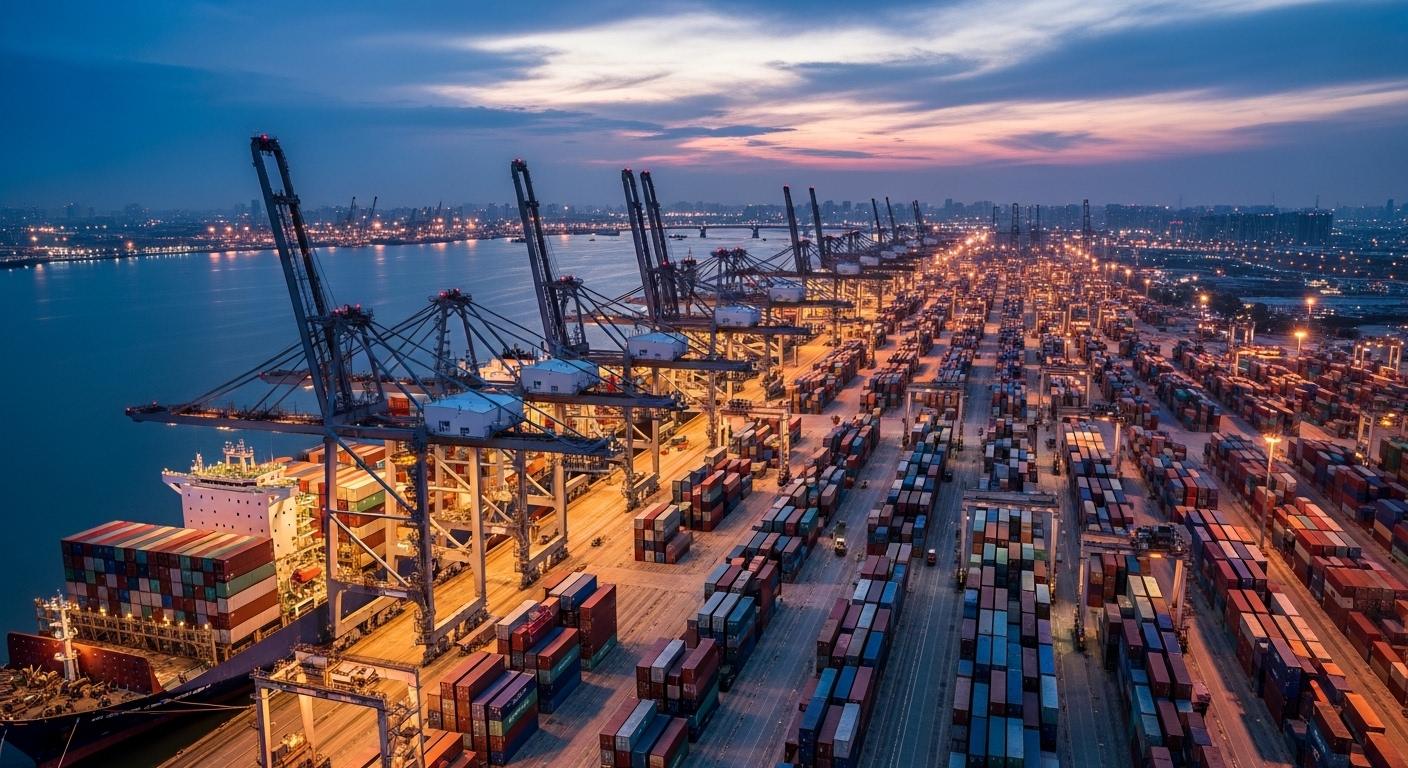
Kuwait imports approximately 90% of its consumer and industrial goods. European imports account for €4.2 billion annually, with Germany, Italy, France, and the UK as the top four suppliers. For Kuwaiti importers looking to source directly from European manufacturers, this guide covers the complete 2026 picture.
Kuwait's import landscape
Kuwait's import dependency makes it one of the most open procurement markets in the Gulf. With a population of 4.3 million (including 3.4 million expatriates), a high per-capita income (GDP per capita ~€25,000), and virtually no domestic manufacturing base, Kuwait's private and public sectors buy virtually everything.
Key import categories from Europe:
- Industrial machinery and equipment: €1.1 billion annually
- Automobiles and automotive parts: €0.8 billion
- Pharmaceuticals and medical equipment: €0.6 billion
- Food and beverages: €0.4 billion
- Chemicals and plastics: €0.5 billion
The opportunity: Many Kuwaiti importers still source through UAE-based distributors who add 15–25% margins. Direct European sourcing eliminates these intermediary costs.
Kuwait customs and regulatory framework
Kuwait's import regulations fall under the Kuwait Ministry of Finance (Customs Authority) and multiple product-specific regulators:
Kuwait Municipality: Food products, cosmetics, and consumer goods require Kuwait Municipality approval. Standards align broadly with GCC Technical Regulations, which reference European and international standards.
Ministry of Commerce and Industry (MoCI): Industrial products, machinery, and electrical equipment. MoCI oversees conformity with GCC technical regulations.
Ministry of Public Health (MoPH): Pharmaceuticals, medical devices, food supplements, and cosmetics. EU CE medical device certification accelerates MoPH registration.
PACI (Public Authority for Civil Information): Product registration for certain categories requires PACI-approved trademark/brand registration.
Port of entry — Shuwaikh and Shuaiba
Shuwaikh Port (Kuwait City):
- Primary commercial port for containerized imports
- Direct shipping lines from Hamburg, Antwerp, Rotterdam
- Transit time from Northern Europe: 18–22 days
- Handling capacity: 700,000 TEU/year (upgraded 2023)
Shuaiba Industrial Port:
- Heavy industry and bulk cargo
- Petrochemical and construction materials
- Industrial equipment and machinery preferred here
Mina Al-Ahmadi:
- Oil industry related imports
- Specialized equipment for energy sector
Logistics tip: Shuwaikh operates 24/7 since 2022 — a significant improvement that reduced average vessel dwell time from 5.2 days to 3.1 days. Direct weekly sailings from Hamburg and Antwerp are available through Hapag-Lloyd, MSC, and CMA CGM.
Kuwait Customs duty rates on European goods
Kuwait applies the GCC Common External Tariff (CET):
- Most goods: 5% of CIF value
- Tobacco: 100%
- Alcohol: Prohibited (import ban)
- Pork products: Prohibited
- Pharmaceutical products: 0% (with MoPH approval)
- Agricultural equipment: 5%
- Medical devices: 0–5%
- Steel and construction materials: 5%
GCC rules of origin: European goods certified as EU-origin with EUR.1 certificate receive preferential tariff treatment under the EU-GCC partial trade framework. Ensure your European supplier provides EUR.1 from their national chamber of commerce.
Required import documentation for Kuwait
Complete Kuwait customs clearance requires:
- Commercial Invoice — in English and Arabic (Arabic translation mandatory for consumer goods)
- Packing List — detailed contents, weights, dimensions per package
- Bill of Lading or Airway Bill — original or electronic release
- Certificate of Origin — EUR.1 form (EU-issued, endorsed by relevant embassy)
- Conformity Certificate — from GCC-recognized testing body (SGS, Bureau Veritas, Intertek)
- Health Certificate — for food, beverages, and products with organic content
- Halal Certificate — mandatory for all food, beverages, cosmetics, and personal care products
- Product Registration — for regulated categories: pharmaceuticals, medical devices, pesticides
- Commercial registration in Kuwait (or JV with Kuwaiti agent)
- Ministry of Commerce and Industry commercial license
- PACI registration for regulated products
- Financial statements for last 3 years
- Technical capacity documentation (ISO certifications, project references)
- Ministry of Health (MoH) — government hospital procurement
- Kuwait University Medical Center — academic and research equipment
- Dasman Diabetes Institute — specialized diagnostic equipment
- Al-Razi Hospital (private) — private sector medical equipment
Common mistake: Kuwaiti importers sometimes receive goods without Arabic labels. Kuwait Municipality requires Arabic labeling pre-import for consumer products. Relabeling at the port warehouse is possible but adds 3–5 days and costs 500–2,000 KWD for a container load.
Payment terms that work for Kuwait-Europe trade
Kuwait's banking system is sophisticated with strong relationships to international correspondent banks. The most common payment structures:
Letter of Credit (sight or 90 days): Standard for first-time transactions and orders above KWD 20,000 (~USD 65,000). Kuwait's major banks (National Bank of Kuwait, Commercial Bank of Kuwait, Gulf Bank) all have strong SWIFT correspondent relationships with European banks.
Bank Guarantee: Kuwaiti buyers sometimes prefer providing a bank guarantee rather than opening an LC — this gives them more flexibility on payment timing while protecting the European seller.
Documentary Collection (D/P or D/A): Used for established relationships. D/P (documents against payment) is safer; D/A (documents against acceptance) creates a credit period of 30–90 days.
Open Account with Credit Insurance: Some European suppliers extend 30–60 day open account terms to established Kuwaiti buyers when the Kuwaiti company has strong credit ratings. European export credit agencies (Euler Hermes, UKEF, Atradius) cover Kuwait at "good" risk ratings.
Government procurement in Kuwait
Kuwait government entities — Kuwait Oil Company (KOC), Kuwait Petroleum Corporation (KPC), Ministry of Public Works, Ministry of Health — represent the largest procurement volumes. Government procurement operates through:
Central Tenders Committee (CTC): All government purchases above KWD 1,000 (USD 3,250) must go through CTC. Tender documents published on procurement.gov.kw.
Registration requirements for government tenders:
Agency law: Kuwait Commercial Law requires that foreign companies appoint a Kuwaiti commercial agent for government tender participation. Agent commission: typically 5–10% of contract value.
Kuwait's healthcare sector opportunity
Kuwait has committed KWD 3 billion (~USD 10 billion) to healthcare infrastructure expansion through 2030, including 5 new hospitals, a national cancer center, and primary care network expansion. European medical equipment manufacturers who establish presence in Kuwait now are positioning for 5–10 years of hospital equipment procurement.
Key Kuwaiti health authorities for European medical companies:
Request Kuwait market entry support — we connect European companies with qualified Kuwaiti importers and navigate the agency registration process.