
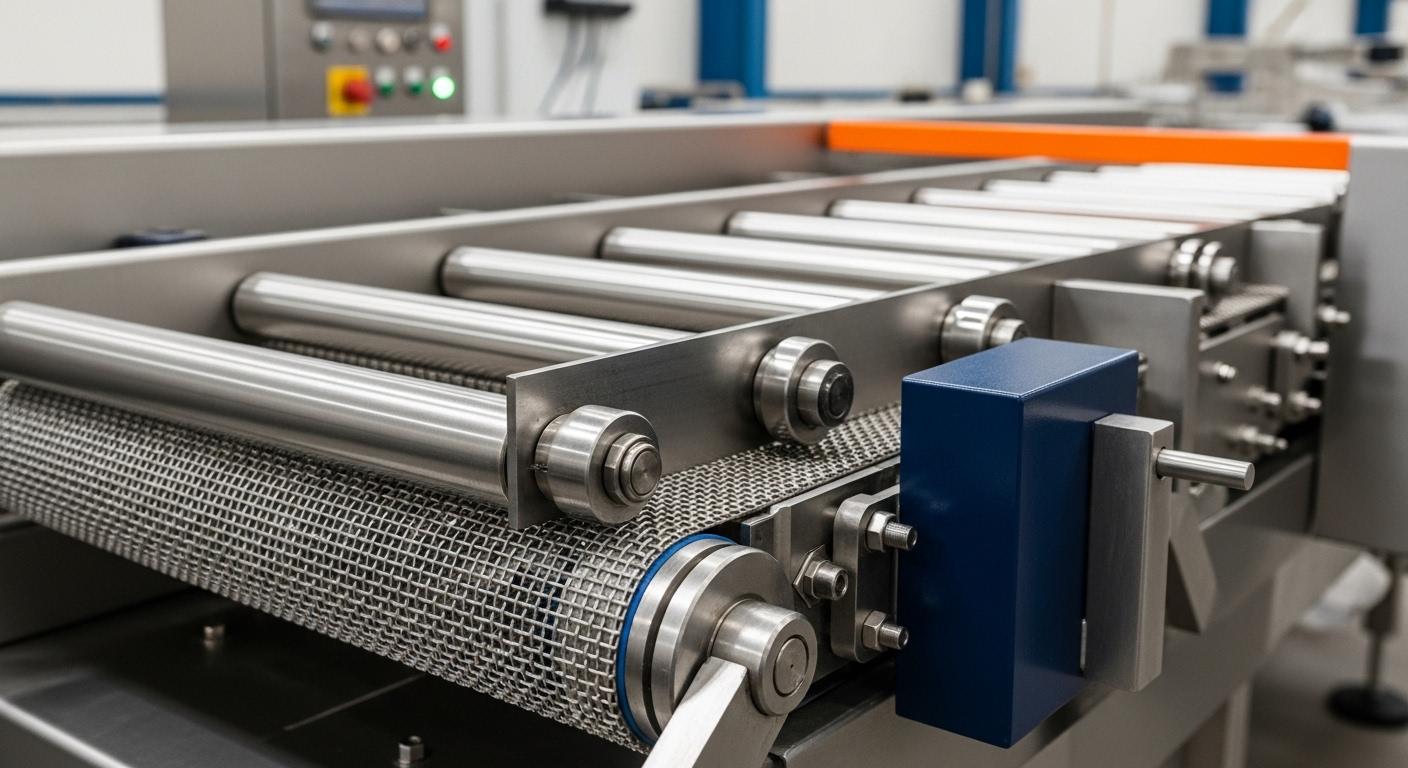
European food processing equipment is the global benchmark for hygiene, automation, and throughput — and MENA food manufacturers are buying more of it than ever. MENA food processing equipment imports from Europe grew 22% in 2024 as regional food security investments accelerated. Here is the complete buyer's guide for procurement teams.
Why MENA food manufacturers choose European equipment
The decision to buy European food processing equipment over alternatives (Chinese, American, or Turkish) comes down to four factors:
Regulatory compliance built-in: European food equipment is designed and certified to EU hygiene standards (EC 1935/2004, Machinery Directive 2006/42/EC). For MENA manufacturers exporting to European markets — or simply meeting domestic food safety standards — this certification reduces the certification burden significantly.
Stainless steel quality: European manufacturers typically use 316L stainless steel for food-contact surfaces, with surface finish Ra ≤ 0.8 μm, which meets EHEDG (European Hygienic Engineering and Design Group) guidelines. Asian alternatives often use 304 stainless with worse surface finishes that harbor bacteria in micro-scratches.
Automation and throughput: German and Italian processing equipment routinely handles throughput 30–50% higher than equivalent-priced alternatives at comparable energy consumption. For high-volume producers, the payback period on the European premium is typically 18–30 months.
After-sales support: Leading European food equipment manufacturers (GEA Group, SPX Flow, Alfa Laval, MULTIVAC, Tetra Pak) maintain regional offices or certified service partners in UAE, Saudi Arabia, and Egypt. Parts availability and technical support are reliable.
Key European countries and their specialties
Germany: Filling, packaging, and dairy processing. Key manufacturers include GEA Group (Düsseldorf), KHS (Dortmund for beverage filling), MULTIVAC (packaging machinery). German equipment commands a 15–25% price premium but delivers highest automation levels.
Italy: Bakery, pasta, confectionery, and olive oil processing. Italian manufacturers like Ima Group, Cama Group, and Sasib dominate the confectionery and baking segment. Italian equipment often offers better aesthetic design and more flexible production configurations.
Netherlands: Potato processing, dairy, and controlled-atmosphere storage. Kiremko (potato processing), FrieslandCampina Technology (dairy). Dutch equipment is particularly strong for potato chip and frozen vegetable lines.
Denmark: Meat processing. FOSS (analytical instruments), Marel (poultry and red meat processing). Danish meat processing equipment sets global standards for yield optimization.
Equipment categories and price ranges
| Category | Representative Brands | Price Range (EUR) | MENA Demand |
|---|---|---|---|
| Filling and packaging lines | GEA, MULTIVAC, Ishida | 80,000 – 500,000 | Very high |
| Pasteurization and sterilization | Alfa Laval, SPX Flow | 50,000 – 300,000 | High |
| Bakery lines | Rheon, AMF Tromp | 100,000 – 800,000 | High |
| Meat processing | Marel, Treif | 60,000 – 400,000 | Growing |
| Dairy processing | GEA, Tetra Pak | 200,000 – 2,000,000 | High |
| Vegetable washing/sorting | Key Technology, Tomra | 40,000 – 200,000 | Growing |
Compliance and certification requirements
European food processing equipment sold into MENA markets must meet:
CE Machinery Directive (2006/42/EC): All rotating, powered machinery must carry CE with Declaration of Conformity and technical file. For food equipment, the DoC must specifically cite the Machinery Directive.
EHEDG certification (voluntary but important): EHEDG-certified equipment has been independently validated for hygienic design. In Saudi Arabia and UAE government tender specifications for food manufacturing investments, EHEDG is increasingly listed as a preferred qualification.
SABER (Saudi Arabia): Industrial machinery entering Saudi Arabia requires SABER Product Certificate of Conformity. For food processing equipment, the SCoC requires: CE DoC, manufacturer's technical file summary, and inspection by SABER-accredited body.
Local food authority requirements: Saudi SFDA, UAE ESMA, and Egyptian MOH all have requirements for food contact materials. Equipment with food-contact surfaces must have material certifications confirming food-grade compliance.
Financing food processing equipment from Europe
Large food processing equipment investments (€200,000+) have several financing options tailored for MENA buyers:
German export credit (Euler Hermes / KfW IPEX): The German export credit agency Euler Hermes provides buyer's credit guarantees for German equipment exports to MENA countries. For qualified buyers, this enables 80–85% financing of the equipment cost at subsidized interest rates (currently 3.5–5% for MENA buyers, versus commercial rates of 7–9%).
ECGD / UK Export Finance: UK-manufactured equipment can access similar buyer's credit programs.
Supplier-extended payment terms: Many mid-tier European food equipment manufacturers offer 30% deposit + 70% on delivery/commissioning for established buyers. Some offer 24-month installment financing through European bank partnerships.
Islamic finance structures (Murabaha): For Saudi and UAE buyers using Islamic banking, Murabaha financing can be structured for European equipment purchases — the Islamic bank purchases the equipment and sells it to the buyer at a disclosed profit margin. Standard terms: 20% down, 80% over 36 months.
Lead times and installation planning
European food processing equipment lead times are significantly longer than commodity goods:
- Standard equipment (catalog items): 8–14 weeks from order to ex-works
- Semi-custom configurations: 14–20 weeks
- Full production line design and build: 24–52 weeks
Installation and commissioning: Plan for 2–4 weeks of factory acceptance testing (FAT) at the European manufacturer's facility, followed by 1–3 weeks on-site commissioning in your facility. European technicians travel to MENA for commissioning — budget €800–1,500/day per technician including travel.
Training: Most European equipment manufacturers include 3–5 days of operator training at commissioning. Extended training programs (2–4 weeks at European facility) are available for €3,000–8,000 per trainee.
How to run a compliant tender for European food equipment
For MENA food manufacturers running competitive tenders:
- Define specifications in EU terminology — use ISO and EN standards rather than local standards alone; European manufacturers can directly cross-reference
- Request CE DoC as mandatory tender document — eliminates fake or non-compliant suppliers at the first gate
- Require EHEDG certification for food-contact machinery if hygiene standards are critical
- Ask for reference installations in MENA — European manufacturers who have experience in your region understand SABER, installation logistics, and local operator skill levels
- Include spare parts availability commitment — 10-year spare parts commitment is standard for major European manufacturers; insist on this in contract
Request sourcing assistance — we identify and pre-qualify European food processing equipment suppliers for your specific production requirements.